10 AI Guides That Helped Readers Build Real Systems
A practical path through second brains, Claude agents, AI loops, vibe coding, local models, and the systems behind them.
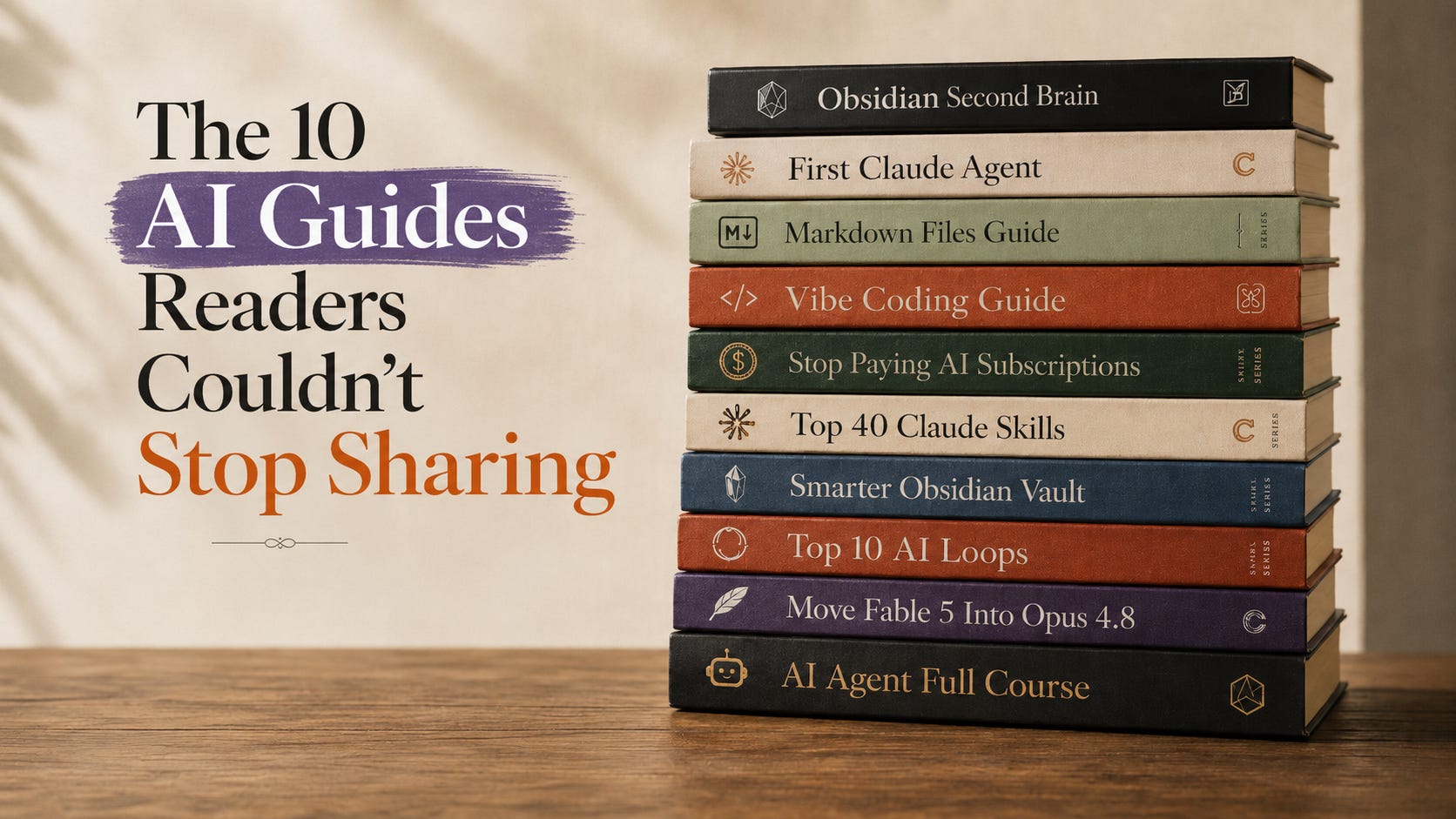
TL;DR
- Organize scattered knowledge into a connected system (a 'second brain') using tools like Obsidian, storing notes as Markdown files for accessibility by AI and other tools.
- Develop effective retrieval methods for knowledge bases by organizing notes based on human memory patterns and using templates and specific files (like CLAUDE.md) to help AI understand context.
- Create persistent working environments for AI models using configuration files (e.g., AGENTS.md, SKILL.md) instead of repetitive daily instructions.
- Build practical AI agents with specific jobs, like a Daily Briefing Agent, by integrating folders, instructions, skills, memory, and safety rules.
- Preserve task methods as reusable Claude Skills, incorporating steps, templates, examples, and tools to automate work and improve workflows.
- Implement AI loops for continuous tasks, defining start conditions, context, actions, result checking, state saving, and stop criteria.
- Understand the complete agent-building process, from defining a job to implementing instructions, tools, memory, human approval, testing, and deployment.
- Learn 'vibe coding' to build real applications with AI, moving from generating basic pages to planning features, editing files, running commands, and deploying apps safely.
- Explore local AI options for running models on personal hardware to manage costs, enhance privacy, and handle routine tasks without cloud subscriptions.
- When temporary access to powerful models is available, use it to build the operating system (rules, playbooks, memory) for other models, preserving methods rather than model-specific intelligence.