Hot take on GPT-6 Astra
An impressive system that can (to some unknown extent) build symbolic world models
TL;DR
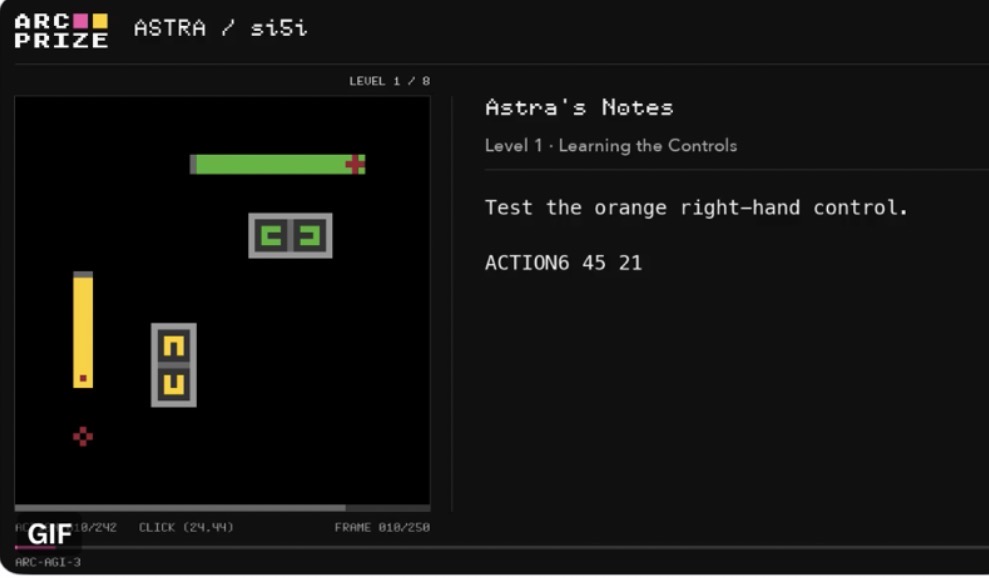
- OpenAI's Astra achieves SOTA on ARC-AGI, scoring 63% on ARC-AGI-3 and surpassing human performance on 96% of its levels.
- The system builds precise symbolic models of novel environments.
- The robustness of Astra's symbolic modeling capability is the key unknown.
- Success on ARC-AGI is not proof of AGI, and open-ended real-world tasks may present significant challenges.
- Lack of transparency regarding how the system works raises concerns about its capabilities, limitations, and potential risks.
- The system appears less monitorable than prior systems, which is a safety concern.
- The author awaits further information and detailed examination of Astra's limitations.
Hot take on OpenAI GPT-6 Astra*1, with a challenge to Greg Brockman’s claims about it being AGI toward the end:
Looks to be pretty impressive. Multiple reports suggest it is a genuine advance.
As someone who has campaigned for nearly a decade for (neuro)symbolic world models, often to exceptional hostility, it isextraordinarilyvindicating to see that a product from OpenAI explicitly creates and manipulate symbolic world models in the course of some of its most impressive computations.
What we don’t know is how robust that capability is. That is THE key question.
Success on ARC-AGI is great and impressive, but not —despite the name of the task—proof of AGI; I suspect we will see loads of problems with open-ended real world tasks. As with other recent models I would suspect best performance in verifiable domains.
And as a scientist, it’s disappointing that we don’t (yet?) know much about how the system actually works.
Without a clearer sense of what’s under the hood, I feel less confident about both what it can and can’t do, and what new risks we may encounter. I doubt the world is ready.
As ever, enthusiasts got an advance look; skeptics did not. That’s a sound marketing strategy, but it often turns out to be misleading. What we have often seen is initial enthusiasm that gets tempered over time. I suspect we will see that here as well.
The new system appears to belessmonitorablethan prior systems, which is not great from a safety perspective. One really doesn’t want more capability in conjunction with less monitorability. But also morealignable, not sure why.
Would be great to see whether Astra can make progress on any of the ten tasks that Miles Brundage and I bet on at the end of 2024. (No AI to date has succeeded on any, AFAIK.)
This hot take is VERY tentative, pending more information about how the systems works and more detailed examination of what its limitations are.